A cockpit's job sounds simple — hold the wheel base, pedals and seat in place — but how well it does that job depends entirely on its construction, and that's what separates a €200 wheel stand from a €1,500 aluminium profile rig. Buy the wrong one for your wheel base and you'll feel it immediately, usually as flex you can't tune away.
Wheel stands: minimal footprint, minimal rigidity
A wheel stand is a tripod-style frame that clamps your wheel base and pedals at roughly the right height and angle, usually folding flat or down to a small footprint when you're done. They're the cheapest way to get off a desk clamp and are genuinely fine for belt-driven and entry direct drive bases. Push a high-torque direct drive base into one, though, and you'll feel the same flex problem a desk has — just slightly better controlled.
Steel cockpits: a fixed, affordable frame
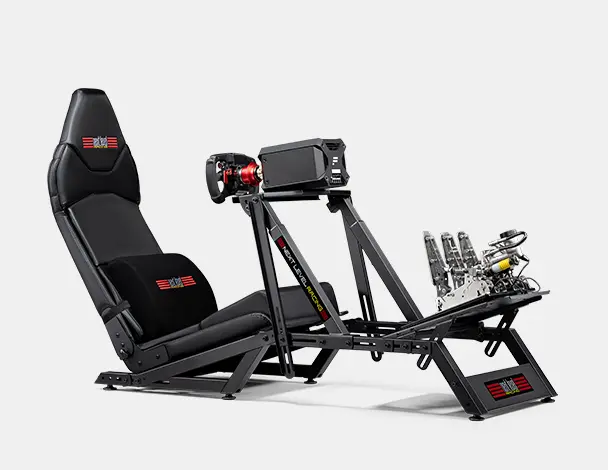
Welded or bolted steel tube cockpits add real weight and a lower centre of gravity, which meaningfully improves rigidity over a wheel stand at a similar or only slightly higher price. The tradeoff is that the wheel, pedal and seat positions are usually fixed or only lightly adjustable, so measure your own driving position before buying — these frames are harder to resize later than aluminium profile rigs.
Aluminium profile rigs: rigid and rebuildable
Aluminium profile cockpits are built from modular extruded aluminium bars, the same system used in a lot of workshop and factory furniture, bolted together into whatever layout you need. That modularity means you can slide the pedal plate, reposition the seat rail or extend the frame as your setup grows, and the bar cross-section resists twisting far better than sheet steel at a comparable weight. It's the standard choice for mid-to-high torque direct drive bases, and the price reflects that — both in the frame itself and the per-part mounting hardware.


| Rig type | Typical price | Good for |
|---|---|---|
| Wheel stand | €150–350 | Belt-driven and entry direct drive bases, small/shared spaces |
| Steel cockpit | €250–600 | Entry to mid direct drive, fixed dedicated space |
| Aluminium profile rig | €500–1,500+ | Mid-to-high torque direct drive, setups that will keep growing |
Match the rig to your wheel base torque
The core rule is simple: the stronger your wheel base, the more rigidity you need underneath it, or the frame flexes before the chassis does and you lose the detail you paid for in force feedback. If you haven't picked a base yet, our direct drive vs belt-driven guide covers typical torque ranges and when rigidity actually starts to matter. SimRigPicker also flags in your build when a wheel base is likely to outgrow the frame you've picked.
Think about footprint before price
A cockpit that's technically the best value on paper is a bad buy if it has to live in a room that gets used for other things. Foldable wheel stands and some steel frames collapse or roll away; most aluminium profile rigs are built to stay assembled permanently. Decide this before comparing prices, since it narrows the list faster than torque does for a lot of buyers.
Once you know the rigidity and footprint you need, compare real cockpits with live prices on the Cockpits & Rigs page, then add a seat that fits your frame's mounting style.
FAQ
Do I need a cockpit for a direct drive wheel base?
Below about 10-15 Nm, a heavy-duty desk clamp can work. Above that, most desks flex before the chassis does, which blurs the feedback detail you bought the base for, so a rigid cockpit becomes worth it.
What's the difference between a steel and aluminium profile cockpit?
Steel cockpits are usually a fixed welded frame at a lower price. Aluminium profile rigs are built from modular extruded bars that bolt together, costing more but letting you reposition the wheel, pedals and seat independently as your setup changes.
Is a wheel stand good enough to start?
Yes, for a belt or entry direct drive base under roughly 10 Nm and a budget pedal set. Wheel stands fold away and need no permanent floor space, which matters more than rigidity for most first-time buyers.