It's easy to treat a seat as the last, least important item on a build list, but it's the one part touching your body for every minute of every session. The shell type you pick affects how securely you're held under braking, how clearly you feel haptics, and how comfortable a two-hour endurance stint actually is.
Fixed bucket seats
A fixed bucket seat is a single rigid shell, usually fibreglass or thin moulded plastic with light padding, bolted directly to the rig. Because the shell itself doesn't flex or recline, it holds your torso in place far more securely under hard braking and through simulated cornering loads — the same reason real race cars use fixed buckets rather than adjustable seats. That rigidity also means vibration from bass shakers or tactile transducers passes through to your body with very little lost in the shell itself.
Reclining seats
A reclining seat uses a hinged backrest, more substantial foam padding, and often full upholstery, trading some rigidity for comfort over long sessions and easier adjustment between different drivers sharing the same rig. For a two-hour endurance race or a setup used by more than one person in a household, that adjustability is a real, practical advantage that a fixed shell can't match.
How seat choice interacts with haptics
If motion or haptic feedback is anywhere on your build plan, seat choice isn't just about comfort. A thinner, more rigid fixed shell transmits bass shaker and tactile transducer vibration far more clearly than a heavily padded reclining seat, where foam and upholstery absorb some of the detail before it reaches you. If you're planning to add motion and haptics later, factor that into the seat you buy now.
Mounting and compatibility
Most seats bolt onto a cockpit through universal side brackets matching standard bucket-seat rail spacing, or sit on a sliding rail for fore-aft adjustment. Not every seat ships with brackets included, and not every cockpit supports every mounting style, so check your cockpit's seat mounts before buying. Seats only unlock in a SimRigPicker build once a rig is already in your parts list, since the mounting depends on it.

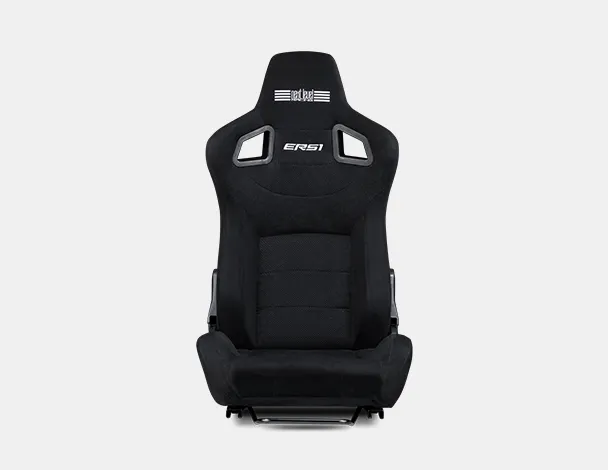
| Seat type | Typical price | Good for |
|---|---|---|
| Fixed bucket shell | €100–300 | Short, intense sessions, maximum rigidity, haptics |
| Reclining seat | €250–500+ | Long endurance stints, shared setups, comfort |
Once you know which shell type fits your sessions and setup, compare real seats with live prices on the Seats page, or go back to the build picker to see what else your rig unlocks.
FAQ
Is a fixed bucket seat better than a reclining seat?
Neither is strictly better. A fixed shell holds you more securely under braking and transmits haptic vibration more directly, while a reclining seat is more comfortable for long sessions and easier to share between users of different heights.
Does seat choice affect motion and haptics?
Yes. A thinner, more rigid fixed shell transmits vibration from bass shakers or tactile transducers more clearly than a heavily padded reclining seat, where foam absorbs some of the detail before it reaches you.
How do seats mount to a cockpit?
Most seats bolt on through universal side brackets that match standard bucket seat rail spacing, or sit on a sliding seat rail for fore-aft adjustment. Check your cockpit's mounting style before buying a seat, since not every seat ships with brackets included.